How often should you use a face mask after 50?
2026-07-29 · 5 min read
How often should you use a face mask after 50?
Use a hydrating or nourishing mask one to two times per week. Daily use is unnecessary and can disrupt the skin barrier, especially as oil production declines with age.
The short version
- Limit masks to two sessions weekly.
- Focus on barrier-strengthening ingredients.
- Avoid daily use to prevent irritation.
- Pair masks with consistent daily routines.
Why skin needs change after 50
As skin matures, the cellular turnover rate slows. Sebum production decreases, leading to increased transepidermal water loss. The barrier function becomes less efficient, making the skin more susceptible to environmental stressors. Face masks in your fifties serve a specific purpose: they act as a concentrated dose of targeted ingredients. They are not a replacement for your daily serum or moisturizer. They are an intervention. Using the Ageless Silk Mask helps supply HPR retinoids without the harshness often associated with traditional prescriptions. When applying these treatments, focus on the areas where elasticity is most compromised. Do not expect structural changes. Topicals cannot replace the volume lost through natural fat pad atrophy. They can only optimize the surface health of your current tissue.
Is daily masking a mistake?
Daily masking is rarely productive. For mature skin, the goal is stabilization, not constant stimulation. Over-applying active ingredients, even soothing ones, can lead to chronic low-grade inflammation. This inflammation impairs the very barrier you are trying to support. Most masks contain humectants and emollients that rely on the skin's natural pH to function. Constant occlusion disrupts this balance. If you are using a mask every day, you are likely over-cleansing and over-treating your skin. This leads to sensitivity and redness. Stick to a twice-weekly rhythm to allow the skin to regain its equilibrium. Consistency over a three-month period is the only way to observe actual changes in skin texture. Quick fixes do not exist in dermatological science.
Hydrating versus exfoliating masks
Not all masks are designed for the same biological pathway. Exfoliating masks, particularly those with AHAs like glycolic or lactic acid, should be used with extreme caution after 50. Use these no more than once every ten days. Over-exfoliation creates micro-tears in the barrier, which takes much longer to heal as you age. Conversely, hydrating masks focus on occlusives and lipids. These can be used twice weekly. They work by temporarily trapping moisture, which helps plump the stratum corneum and diminishes the appearance of fine lines. Look for ingredients like ceramides, squalane, and panthenol. These mimic the lipids the skin no longer produces in abundance. Remember that hydration is a temporary state. It requires a dedicated daily regimen to sustain.
The role of active ingredients
When choosing a mask, prioritize ingredients that support the skin barrier rather than those that promise dramatic transformation. After 50, peptides and stable retinoids are the most reliable agents. Peptides help signal cellular responses, while HPR retinoids support turnover with significantly less irritation than prescription-strength retinoic acid. Avoid fragrances and high concentrations of alcohol. These ingredients dry out mature skin and exacerbate irritation. If a product feels hot or tingling for more than a few seconds, rinse it off immediately. You do not need to suffer for efficacy. A mask should feel calming and integrated into your skin's natural biology. If you need intense rejuvenation, a professional clinical procedure is a more direct path than any at-home treatment.
How to time your treatments
Timing matters. Use your mask in the evening. Overnight is when the skin undergoes its peak regenerative processes. Applying a Thermal Recharge Mask or a hydrating treatment before bed allows your skin to utilize those ingredients during its natural repair cycle. In the morning, focus on protection. Use your daily serums and a high-quality moisturizer. Never apply a mask before a major social event expecting immediate, permanent structural changes. Most masks offer a temporary visual improvement through hydration. This effect lasts anywhere from a few hours to a full day. If you want sustained results, focus on your morning and evening routines. Treat the mask as a supplement to your main regimen, not the main event.
Managing expectations for mature skin
It is important to remain realistic. No topical product can stop the progression of aging. We can manage the hydration levels, the texture, and the appearance of fine lines through consistent skincare, but we cannot halt the loss of subcutaneous fat or changes in bone density. When you look in the mirror after using a mask, look for subtle changes in comfort and suppleness rather than dramatic volume return. If your skin feels soft and less taut, the product has done its job. If you are looking for significant tightening or volume correction, consult a dermatologist to discuss professional injectables. Topical skincare is meant to optimize, protect, and maintain. It is not an alternative to medical-grade aesthetic interventions.
Questions people ask
Yes, but be selective. Avoid exfoliating acids and physical scrubs. Look for barrier-repairing masks containing ceramides, glycerin, or soothing botanical oils. Perform a patch test on your neck or inner arm before applying a new product to your full face to ensure no adverse reaction occurs.
Formulas mentioned


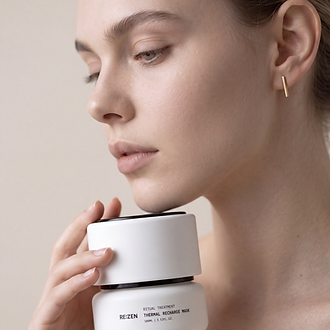

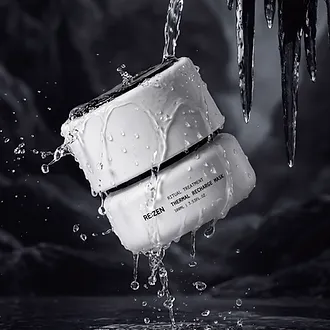
Thermal Recharge Mask
4.7 · 466 reviewsDeeply cleared pores. Renewed skin.
100 G | 3.53 FL. OZ.


Keep reading
The correct order to apply skincare — and why it changes the result
Skincare efficacy depends on sequence. Learn the correct order of application to ensure your active ingredients penetrate the barrier effectively.
Do you actually need a toner? What an essence toner really does
Most toners are redundant. An essence toner is a functional tool designed to manage skin pH and increase the hydration efficiency of your follow-up serums.
Skincare for dry, mature skin: how to build a barrier-first routine
Mature, dry skin requires a barrier-first approach. Learn how to restore lipids and moisture with a focused, evidence-based routine.
Not sure where to start?
Our free AI skin scan reads your hydration, firmness, evenness and texture from one photo, then builds the routine around what your skin actually needs.
Start my skin scan